




Ensuring a home’s safety and accessibility is a top priority for many homeowners, doubly so if you or a loved one use a wheelchair.
Wheelchair ramps can be an indispensable resource for mobility and quality of life, fostering safety, independence, and comfort. If you’re considering adding a wheelchair ramp to your home, understanding wheelchair ramp length is critical for ensuring safety, functionality, and ADA compliance.
At Atlas Home Safety, we specialize in designing and installing ramps tailored to enhancing your home’s accessibility. Serving homeowners throughout Michigan, our dedicated team combines experience, expertise, and compassionate guidance to lead families towards more accessible, safe, and comfortable living.
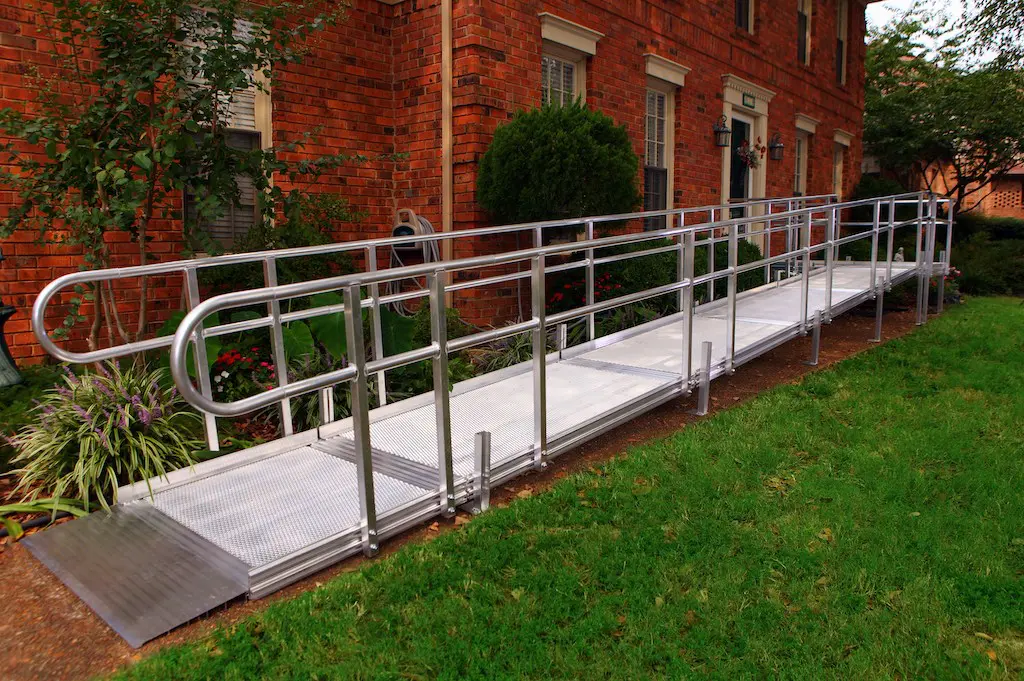
Contact us today for a free consultation, and let us show you why Michigan homeowners trust Atlas for their home safety needs.
In this guide, we’ll cover the essentials on how to determine the correct wheelchair ramp length, explain important ADA guidelines, and demonstrate how Atlas Home Safety can help you find the right ramp for your peace of mind.
Benefits of a Wheelchair Ramp
A wheelchair ramp can improve the usability of a home and support the independence, mobility, and daily routines of people with a wide range of abilities. Whether you are using a wheelchair yourself, providing care for someone who does, or planning a home that accommodates multiple mobility needs, a ramp can make life easier and safer.
Key benefits of a wheelchair ramp include:
- Safety: Ramps reduce the risk of trips and falls by providing a smooth, stable surface for people using wheelchairs, walkers, or other mobility aids.
- Independence: A ramp allows users to move freely without requiring assistance, supporting autonomy and confidence.
- Emergency Preparedness: Ramps provide safer, quicker routes for exiting the home during emergencies.
- Long-Term Convenience: Ramps simplify daily routines and reduce physical strain for anyone moving in and out of the home frequently.
- Social Inclusion: Making entrances and outdoor areas more accessible enables participation in social activities and community life.
Understanding these benefits helps homeowners prioritize proper planning, including accurate wheelchair ramp length, slope, and design, to ensure safety, usability, and comfort.
The Hidden Dangers of Stairs: Why Ramps Matter
Stairs are common in many homes, but they can pose significant risks for anyone, especially those with mobility challenges. A study from the National Library of Medicine found:
- Millions of Injuries Annually: An estimated 24,760,843 patients were treated in U.S. emergency departments for stair-related injuries over 23 years, averaging over 1 million cases per year.
- This corresponds to roughly 37.8 stair-related injuries per 10,000 U.S. residents annually.
- This corresponds to roughly 37.8 stair-related injuries per 10,000 U.S. residents annually.
- Variety of Injuries: Common injuries include sprains, fractures, and head or neck trauma, which can be serious and require medical attention.
- All Ages Affected: Stair-related injuries impact people of all ages, with older adults and young children being especially vulnerable.
- According to the CDC, more than 1-in-4 seniors fall each year.
- According to the CDC, more than 1-in-4 seniors fall each year.
Installing a wheelchair ramp can significantly reduce these risks by providing a safe, stable, and accessible alternative to stairs, supporting independence and mobility for everyone in the household.
Calculating Wheelchair Ramp Length
The key to a safe ramp is ensuring the slope is gentle and manageable for anyone using a wheelchair or mobility device.
While it’s helpful to understand the factors involved, a professional installer will take precise measurements and calculate the correct slope for your home. This ensures safety, comfort, and compliance with ADA standards.
How to Calculate Ramp Length
- Measure the Vertical Rise: Professionals assess the height from the ground to the entrance or threshold.
- Determine the Correct Slope: Installers use the ADA-recommended maximum slope of 1:12 (one inch of rise per 12 inches of ramp), adjusting as needed for residential settings while maintaining safety.
- Account for Space and Layout: Experts plan straight or switchback ramps based on available space, ensuring proper landings and handrails are included.
Example: A 24-inch rise typically requires a 24-foot ramp at a 1:12 slope—but your installer will confirm the exact length needed for your home and needs.
By hiring a professional, homeowners don’t need to worry about complex calculations or DIY errors, and can be confident the ramp is safe and functional.

ADA Guidelines and Design Standards for Wheelchair Ramps
The Americans with Disabilities Act (ADA) is a federal law that ensures people with disabilities have equal access to public spaces, facilities, and services. Following ADA standards for ramps helps ensure they are safe, accessible, and usable by people of all abilities.
Key Wheelchair Ramp Length Guidelines
1. Slope
Maximum of 1:12 for public/commercial ramps; gentler slopes are preferred for residential ramps.
2. Width
Minimum 36 inches of clear width to accommodate wheelchairs comfortably.
3. Landings
Level landings are required at the top, bottom, and every 30 feet for longer ramps. Turns require at least 60 inches by 60 inches.
4. Handrails
Both sides must have handrails mounted 34–38 inches above the ramp surface, extending 12 inches beyond the ramp ends.
5. Surface Conditions
Ramp surfaces must be firm, stable, and slip-resistant for year-round use.
6. Cross Slope
Should not exceed 2% (1:50) to maintain stability and proper drainage.
Understanding these standards helps ensure ramps meet accessibility and safety requirements, and consulting professionals can provide additional guidance when needed.
Factors That Affect Wheelchair Ramp Length
Several factors can influence ramp design and length, such as:
- Available Space: Smaller yards or entryways may require modular sections or switchbacks.
- User Strength and Mobility: Gentle slopes help anyone using a manual wheelchair or mobility device navigate safely and comfortably.
- Usage Frequency: Frequently used entrances benefit from gradual slopes to make daily routines easier.
- Weather and Surface Conditions: Outdoor ramps should be slip-resistant and able to withstand local climate conditions.
Careful consideration of these factors helps create a ramp that is functional, safe, and convenient.
Wheelchair Ramps and Their Length Considerations
When planning an accessible entryway, the type of ramp you choose is just as important as its length or slope. Each ramp style—whether modular, portable, or threshold—serves a specific purpose and fits different home layouts, mobility needs, and installation timelines. Understanding these options helps ensure your ramp is both safe and practical for everyday use.
Types of Ramps
Modular Ramps
Prefabricated sections that can be customized for tight or irregular spaces. Flexible for long-term or evolving needs. Explore modular ramps.
Portable Ramps
Lightweight ramps for temporary or occasional use. Usually fixed-length, so planning is essential to maintain safe slopes.Explore portable ramps.
Threshold Ramps
Short ramps that bridge small rises like doorsteps. Careful slope planning ensures safe use. Explore threshold ramps.
Selecting the right ramp type influences wheelchair ramp length, slope, and overall usability. Your contractor can give you more information on which ramp style is best suited to your home’s layout and your needs.

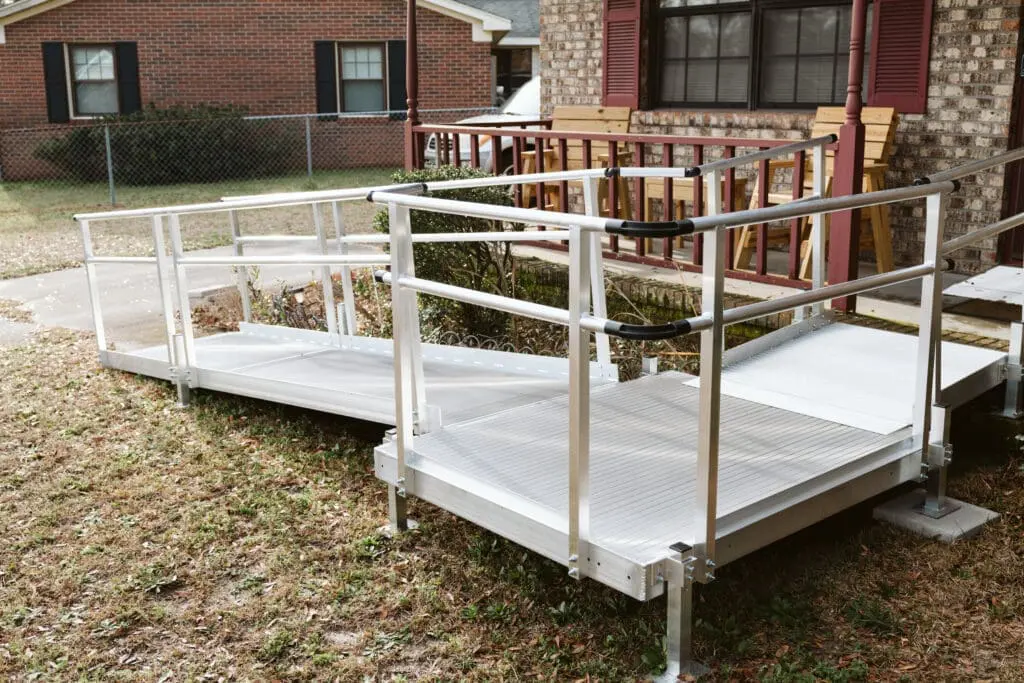
Planning Your Wheelchair Ramp
Proper planning ensures the ramp is safe, comfortable, and accessible—but most importantly, it should be done in collaboration with a professional installer.
Here’s what you can expect during the planning process:
- Assessment and Measurements: Experts evaluate the vertical rise, space constraints, and user needs.
- Custom Design: Professionals design ramps to fit your home, including straight runs, switchbacks, or modular sections for limited space.
- Material Selection: Installers recommend slip-resistant surfaces and durable materials suitable for your climate.
- Landings and Handrails: Properly placed level areas and handrails are planned for safety and ADA compliance.
Working with a professional guarantees that your ramp will meet safety standards, function well for daily use, and support the independence and mobility of anyone using it.
Why Professional Design and Installation Matters
While understanding the facets wheelchair ramp length and ADA standards is essential, there are many reasons to have a professional handle the design and installation. Professionals offer:
- Precision and Safety: Accurate measurements, slope calculations, and secure installations ensure the ramp is safe and fully functional.
- Compliance with Regulations: Professionals stay up-to-date on ADA guidelines and local building codes, reducing liability and ensuring accessibility.
- Durability and Quality: Expert installation guarantees that materials are properly secured and able to withstand daily use and seasonal weather changes.
- Customized Solutions: Every home is different—professionals can tailor ramp designs to the available space, user needs, and future adjustments.
- Time and Convenience: Installing a ramp can be complex and labor-intensive; hiring a professional saves homeowners time and effort
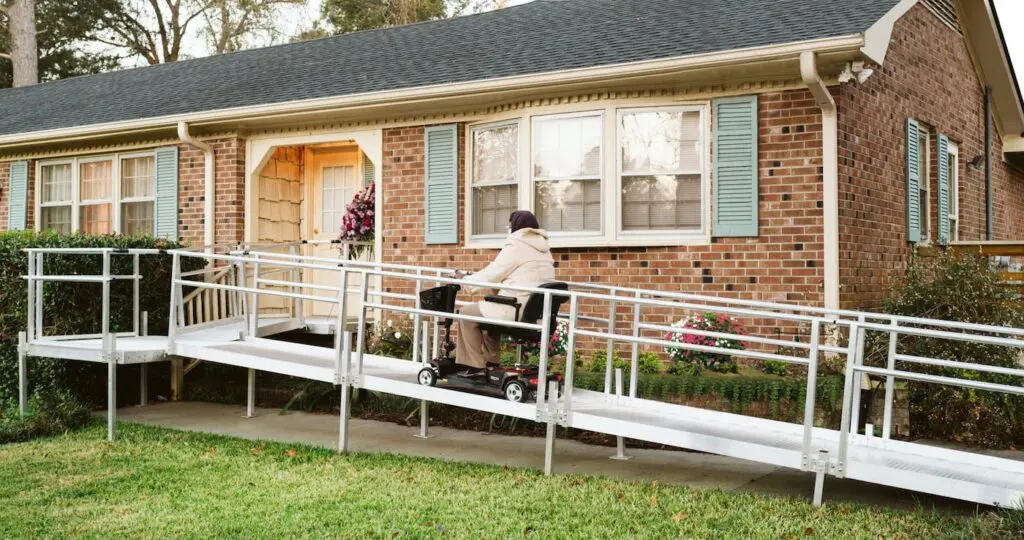
Why Choose Atlas Home Safety?
We know better than anyone how important it is for you to feel safe and comfortable in your home. For residents across Michigan, Atlas Home Safety offers trusted expertise in home accessibility.
Our team has years of experience designing modular, portable, and threshold ramps that meet ADA guidelines while accommodating unique home layouts and individual mobility needs.
Our Assets
- Experienced Staff: Certified professionals trained in ramp design and accessibility solutions.
- Custom Solutions: Tailored ramp designs to fit any home environment and mobility needs.
- Quality Materials: Durable, slip-resistant surfaces for safe year-round use.
- Comprehensive Service: From in-home assessment to installation, Atlas handles every step with precision — our aim is to deliver results to be proud of.
By choosing a licensed and experienced contractor like Atlas, homeowners can ensure their ramp is safe, compliant, and built to last.
Ready to Improve Accessibility in Your Home?
Determining the correct wheelchair ramp length is key to creating a safe, functional, and accessible home environment. By factoring in vertical rise, available space, slope, user mobility, and ADA standards, the experts at Atlas Home Safety can plan a ramp for your home that supports independence, safety, and daily comfort.
Contact us today or submit an online service request to schedule a consultation and take the next step towards increasing your home’s accessibility.
FAQ: Wheelchair Ramp Length
Q: Do I need to calculate wheelchair ramp length myself?
No. A professional installer will measure your home’s vertical rise and available space to determine the correct ramp length, slope, and design for safe and comfortable use.
Q: How do professionals ensure the ramp meets safety standards?
Certified installers follow ADA guidelines and local building codes, ensuring proper slope, width, landings, and handrails. They also choose slip-resistant materials for durability and safety.
Q: What types of ramps can a professional provide?
Experts can install modular ramps for flexibility, portable ramps for temporary use, and threshold ramps for small steps. They will recommend the type that best fits your home, space, and mobility needs.
Q: Can a professional customize the ramp for my home layout?
Yes. Professionals design ramps tailored to your home’s unique dimensions, including switchbacks or landings if space is limited, ensuring accessibility and convenience.
Q: How long does professional installation take?
Installation time varies based on ramp type and complexity, but professionals handle all steps efficiently—from assessment and design to installation—minimizing disruption to your home.
Q: How do I know which contractor to trust?
Look for licensed, experienced professionals with certifications in accessibility solutions, positive reviews, and a track record of safely installing ramps that meet ADA standards.