



For many homeowners, the garage serves as the true front door of the home. It’s where groceries come in, where family members enter and leave each day, and is often the route used most frequently. Yet one of the most common barriers in a garage entry is also one of the easiest to overlook: the step between the garage floor and the home.
While a single step may seem minor, it can become a daily obstacle for older adults, individuals using mobility aids, and anyone recovering from an injury or surgery. What was once a simple transition can suddenly feel frustrating, unsafe, and even impossible to navigate independently.
At Atlas Home Safety, we help homeowners create safer, more accessible living environments through mobility solutions designed around real-life needs. In this guide, we’ll explore practical ways to make garage steps accessible and how to choose the right solution for your home.
If you’re looking for ways to improve mobility and reduce fall risks at home, call 800-768-4498 or contact us online to schedule a consultation and explore accessibility solutions tailored to your needs.
Why Garage Steps Create Accessibility Challenges
Most garages are built slightly lower than the home’s living space. This height difference helps prevent water intrusion and often complies with local building requirements, but it can also create a significant accessibility barrier.
Garage steps can be especially difficult for:
- Older adults aging in place
- Individuals using walkers, canes, or rollators
- Wheelchair users
- People recovering from surgery or injury
- Anyone with balance or strength limitations
The concern extends beyond convenience. According to the Centers for Disease Control and Prevention (CDC) Falls Prevention Program, falls are one of the leading causes of injury among older adults, and stairways are a common location for fall-related incidents.
Because the garage is often one of the most frequently used entrances, improving accessibility here can have an outsized impact on daily safety.
Signs Your Garage Entry Needs Accessibility Improvements
Many homeowners do not think about accessibility until mobility needs begin to change. However, recognizing early warning signs can help prevent injuries and make daily routines easier.
Common indicators include:
- Difficulty stepping into the home from the garage
- Using walls or door frames for support
- Feeling unsteady while carrying groceries or household items
- Increased concern about slipping or falling
- Struggling to navigate the step with a walker or wheelchair
- Family members expressing concern about safety
If any of these situations sound familiar, it may be time to explore accessibility solutions.
Accessibility Solutions for Garage Steps
Modular Ramps
For many homeowners, a modular ramp provides the most effective long-term solution.
Modular ramps create a smooth transition between elevations, allowing individuals using wheelchairs, walkers, or other mobility aids to enter and exit safely. Unlike permanent concrete ramps, modular systems can often be customized to fit existing layouts with minimal disruption.
Benefits include:
- Accommodates wheelchairs, walkers, and rollators
- Customizable to different heights and configurations
- Durable and weather-resistant
- Can often be modified as needs change
- Requires minimal structural changes to the home
For homeowners planning to age in place, modular ramps often provide the greatest combination of safety, flexibility, and long-term value.
Portable Ramps
Not every accessibility challenge requires a permanent solution.
Portable ramps can be particularly useful for:
- Short-term injury recovery
- Post-surgical mobility needs
- Temporary accessibility accommodations
- Situations where flexibility is important
Because they can be moved and stored as needed, portable ramps offer a practical option for changing circumstances.
Threshold Ramps
Sometimes the biggest obstacle is not the garage step itself, but the doorway threshold.
Threshold ramps are designed to bridge small height differences and create smoother transitions for:
- Wheelchairs
- Walkers
- Rollators
- Individuals with limited mobility
Even a seemingly minor threshold can create a tripping hazard or mobility barrier, making these ramps a simple but highly effective improvement.
Understanding Ramp Design Considerations
When planning a ramp, proper design matters just as much as the ramp itself.
Many accessibility professionals reference guidance established in the Americans with Disabilities Act (ADA) Standards for Accessible Design when evaluating slope, landings, and maneuverability. While residential applications may differ from commercial requirements, these principles help create safer, easier-to-use ramp systems.
Factors that influence ramp design include:
- Height of the elevation change
- Available space
- Mobility device requirements
- Turning radius needs
- Handrail considerations
- Surface traction and weather exposure
A professional assessment can help determine the safest configuration for your specific situation.

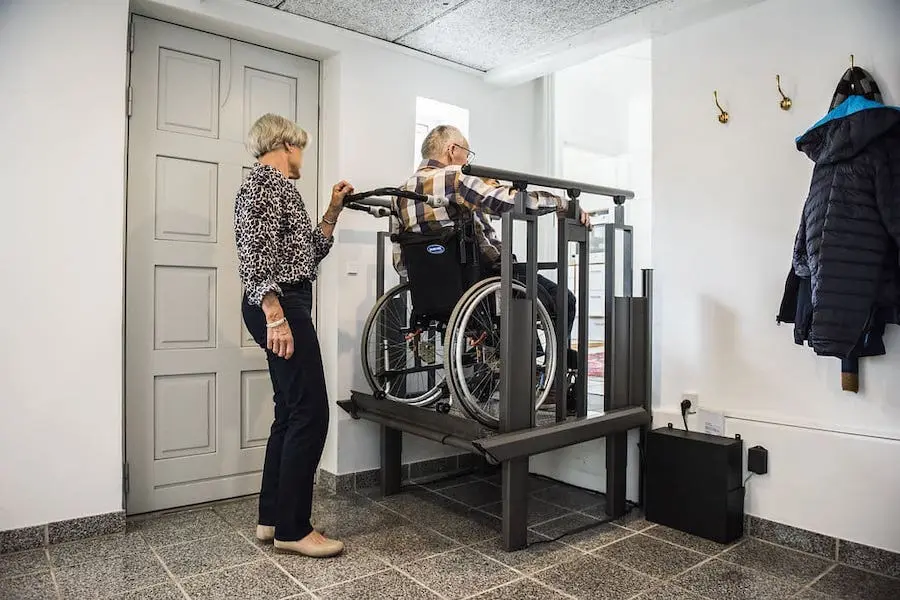
When a Stair Lift May Be the Better Option
Not every garage has enough room for a ramp.
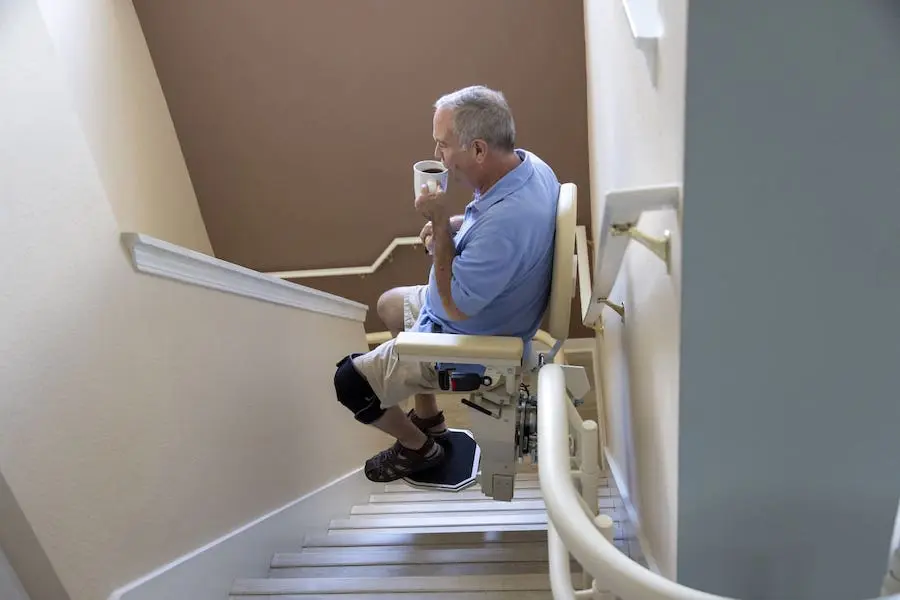
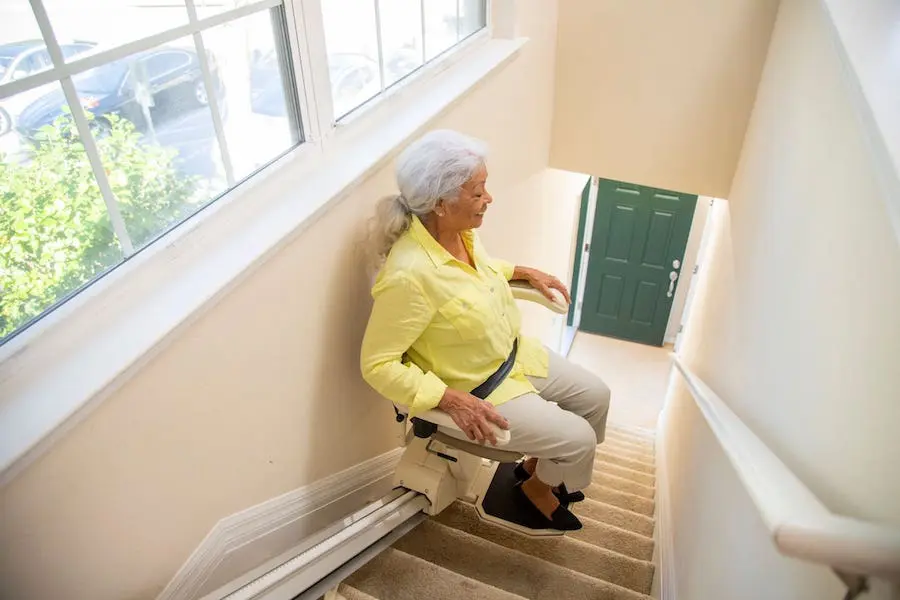
When space is limited, a stair lift can often provide a safer and more practical solution.
A stair lift uses a motorized chair mounted to a rail system, allowing users to travel up and down the stairs without climbing them manually.
Stair lifts may be ideal when:
- The garage entry has multiple steps
- Available floor space is limited
- A ramp would require an impractical footprint
- The user can safely transfer to and from a seated position
Additional Ways to Improve Garage Safety
While ramps and stair lifts provide the most significant accessibility improvements, smaller modifications can further reduce risks.
Install Handrails
Handrails provide additional support and stability when navigating steps and transitions.
Improve Lighting
Garages are often poorly lit, especially during early morning and evening hours.
Better lighting helps:
- Improve visibility
- Highlight step edges
- Reduce trip hazards
- Increase confidence when moving through the space
Add Slip-Resistant Surfaces
Garage floors can become slippery due to rain, snow, mud, or vehicle moisture.
Slip-resistant surfaces and stair treads can help improve traction and reduce fall risks.
increase Visual Contrast
High-visibility markings or contrasting colors can make steps easier to identify, particularly for individuals with reduced vision.
Choosing the Right Solution for Long-Term Independence
Accessibility needs rarely remain static.
Many homeowners initially explore mobility solutions following an injury or medical event but later discover that improved accessibility enhances daily life in ways they never expected.
The National Institute on Aging (NIA) Aging in Place Resource Center recommends proactively addressing common mobility barriers throughout the home to support independence and reduce future fall risks.
When evaluating garage accessibility solutions, consider:
Current Mobility Needs
Do you currently use:
- A walker?
- A cane?
- A wheelchair?
- Other mobility devices?
Future Mobility Considerations
Will your needs likely change over the next five to ten years?
Home Layout
How much space is available? Are there obstacles that affect installation options?
Frequency of use
Because garage entrances are often used multiple times each day, accessibility improvements here frequently provide some of the highest day-to-day benefits.
Why Professional Assessments Matter
Garage accessibility solutions are not one-size-fits-all.
A professional evaluation can help determine:
- Which solution best fits the home
- Space and installation requirements
- Safety considerations
- Long-term mobility goals
The right recommendation should support both current needs and future independence.
Why Homeowners Trust Atlas Home Safety
Atlas Home Safety specializes in accessibility solutions that help people live more safely, comfortably, and independently at home. As a division of Atlas Home Improvement, a Michigan family-owned company serving homeowners since 1989, we bring decades of experience helping families navigate changing mobility needs.
What sets Atlas apart is our personalized approach. We take the time to understand each homeowner’s needs, recommend solutions that fit their lifestyle, and guide them through the process with care and professionalism.
Make Your Garage Entry More Accessible
A garage entrance should help you access your home comfortably, not create obstacles that limit independence or increase fall risks.
Whether you’re planning for aging in place, recovering from an injury, or helping a loved one navigate daily life more safely, the right accessibility solution can make a meaningful difference.
Atlas Home Safety can help you evaluate your options and find a solution designed around your home and mobility needs. Contact our team today or call 800-768-4498 to schedule a consultation and take the next step toward a safer, more accessible home.
FAQ: How to Make Garage Steps Accessible
What is the best way to make garage steps wheelchair accessible?
For many homes, a ramp is the most effective solution because it eliminates the barrier created by steps and allows independent access for wheelchair users.
Are modular ramps better than portable ramps?
Modular ramps are generally better suited for permanent accessibility needs, while portable ramps work well for temporary situations or occasional use.
Can a stair lift be installed in a garage?
Yes. Stair lifts can often be installed on garage entry staircases and are particularly useful when space limitations make ramp installation difficult.
How much space is needed for a garage ramp?
The amount of space depends on the height of the step and the ramp configuration. A professional assessment can determine the appropriate design.
What is a threshold ramp?
A threshold ramp bridges small elevation changes at doorways, helping wheelchairs, walkers, and other mobility devices move smoothly across transitions.
What is the safest option for aging in place?
The safest option depends on the individual’s mobility needs, home layout, and long-term goals. Many homeowners choose ramps or stair lifts as part of a comprehensive aging-in-place strategy.