



A beautiful shower should be comfortable to use, not just beautiful to look at. That’s one reason shower bench styles have become an important consideration during bathroom remodeling. From built-in tiled benches that become part of the shower design to space-saving fold-down seats, there are options for different bathrooms, lifestyles, and mobility needs.
The right shower bench can make everyday routines easier by giving you a comfortable place to sit while bathing, wash or shave your legs, or simply take a break during a longer shower. For homeowners planning to age in place or accommodate changing mobility needs, seating can also become an important part of a broader bathroom safety plan.
At Atlas Home Safety, we’ve helped Michigan homeowners improve their homes for more than 35 years. As a division of Atlas Home Improvement, our family-owned company specializes in personalized bath safety solutions designed around the way you live today and how your needs may change in the future.
In this guide, we’ll compare popular shower bench styles, explain the benefits and tradeoffs of each, and help you think through factors like available space, comfort, accessibility, and long-term use.
Considering a shower remodel? Call Atlas Home Safety at 800-768-4498 or contact us online to explore shower seating and other accessibility options for your Michigan home.
Why Add a Bench to Your Shower Remodel?
A shower bench can look like a luxury feature, but its value goes well beyond appearance.
Having a place to sit can make bathing more comfortable for anyone who gets tired standing, has difficulty balancing, is recovering from an injury, or simply prefers a more relaxing shower. Seating can also make everyday tasks like washing your feet or shaving easier.
For homeowners thinking about the future, a shower bench can become part of an aging-in-place plan. The National Institute on Aging recommends planning ahead for home accessibility and periodically reevaluating home safety as needs change.
A shower bench may help you:
- Sit comfortably while bathing
- Reduce how long you need to stand on a wet surface
- Make washing legs and feet easier
- Rest when fatigue or limited endurance becomes an issue
- Create a convenient place for bathing essentials
- Pair seating with grab bars and a handheld showerhead for a more supportive setup
- Prepare the shower for changing mobility needs
The key is choosing a bench based on how you’ll actually use it, not just which style looks best in a design photo.
6 Shower Bench Styles to Consider for Your Remodel
There isn’t one shower seat that’s right for every bathroom. Space, mobility, design preferences, maintenance, and long-term plans can all influence which option makes sense.
1. Built-In Tiled Shower Bench
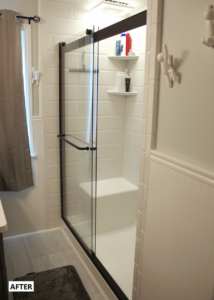
A built-in tiled bench becomes a permanent part of the shower itself. It’s typically framed into the shower and finished in the same or complementary tile as the walls.
This style works particularly well when you want the bench to feel intentional and integrated into the overall design.
A built-in bench may be a good fit if you want:
- Permanent seating
- A generous seating surface
- A custom, high-end appearance
- Tile that coordinates with the rest of the shower
- A bench that can also hold toiletries when it’s not being used for seating
Because it’s built into the shower, planning is important. Framing, waterproofing, slope, drainage, and placement all need to be considered during the remodel.
Built-in benches also take up permanent floor space, so they may not be ideal for every compact shower.
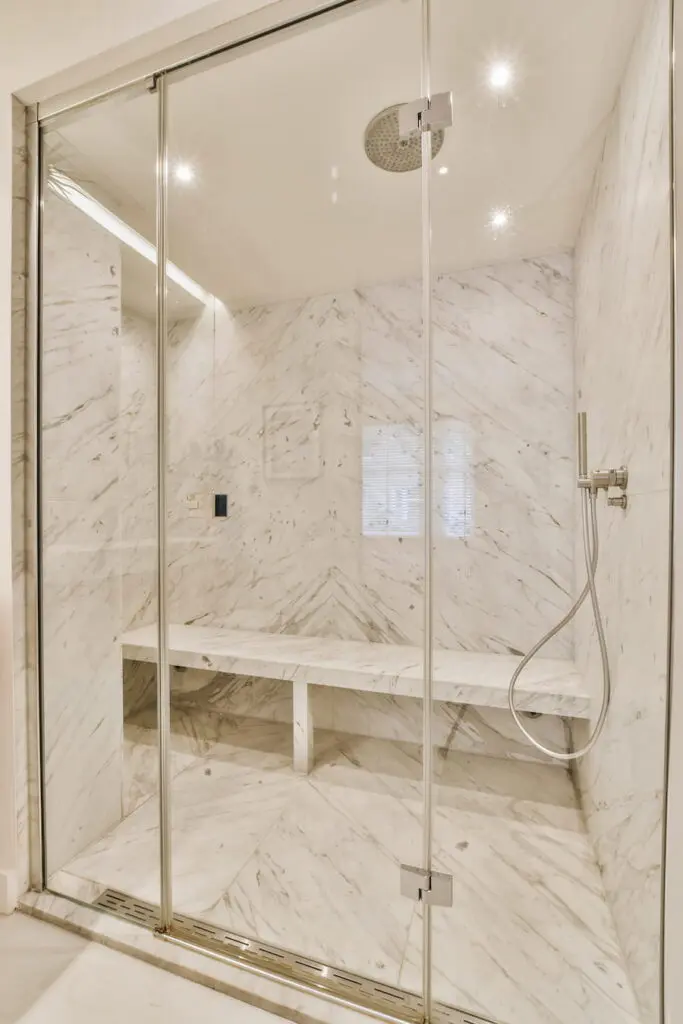
2. Floating Shower Bench
A floating bench creates permanent seating without extending all the way to the shower floor.
Because you can see the flooring underneath, this design often feels lighter and less bulky than a full-height tiled bench. It can be an attractive choice for modern bathrooms where homeowners want seating without visually closing in the shower.
Floating benches may work well if you want:
- A clean, contemporary appearance
- More visible shower floor
- Permanent seating with a smaller visual footprint
- Easier access to the floor beneath the bench for cleaning
The streamlined appearance doesn’t mean installation is simple. A floating seat must have adequate structural support behind the finished wall.
If you’re planning a bathroom remodel, deciding on this type of seating before the walls are finished gives your remodeler an opportunity to incorporate the necessary reinforcement.
3. Fold-Down Shower Seat
Don’t want your shower seat taking up space all the time? A fold-down design may be the answer.
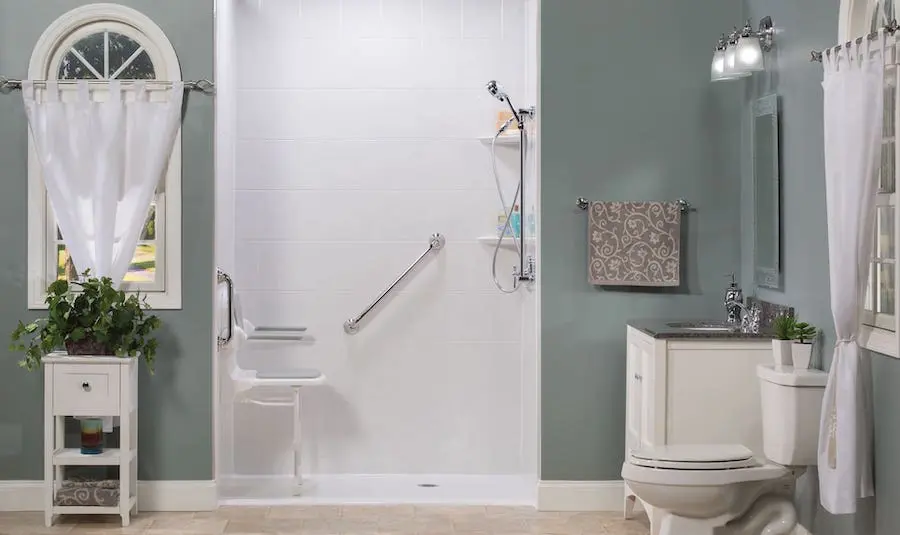
These seats mount to the wall and fold down when needed. When you’re finished bathing, they can be folded back against the wall to reopen the shower.
They’re particularly useful in:
- Smaller showers
- Shared bathrooms
- Aging-in-place remodels
- Bathrooms where mobility needs may change
- Barrier-free showers where maintaining clear floor space is important
Structural support is essential for a wall-mounted seat. As a useful accessibility benchmark, federal ADA Standards require compliant shower seats in covered facilities to withstand a 250-pound force applied to the seat, fasteners, mounting devices, or supporting structure.
Those rules don’t automatically apply to every private home, but they illustrate why a shower seat needs much more support than an ordinary wall-mounted accessory.
4. Corner Shower Bench
A corner bench takes advantage of space that might otherwise go unused.
Because it’s usually smaller than a full-width seat, it can work well in bathrooms where homeowners want occasional seating without giving up as much standing room.
A corner bench may be appropriate if:
- Your shower is relatively compact
- You want a place to rest a foot while washing or shaving
- Full-width seating would make the shower feel crowded
- You need occasional rather than full-time seated bathing
Be careful not to confuse a small corner ledge with a true accessibility seat. A compact perch may be convenient, but it may not offer enough depth or support for someone who needs to remain seated throughout a shower.
5. L-Shaped Shower Seat
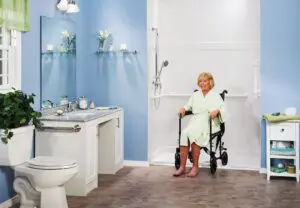
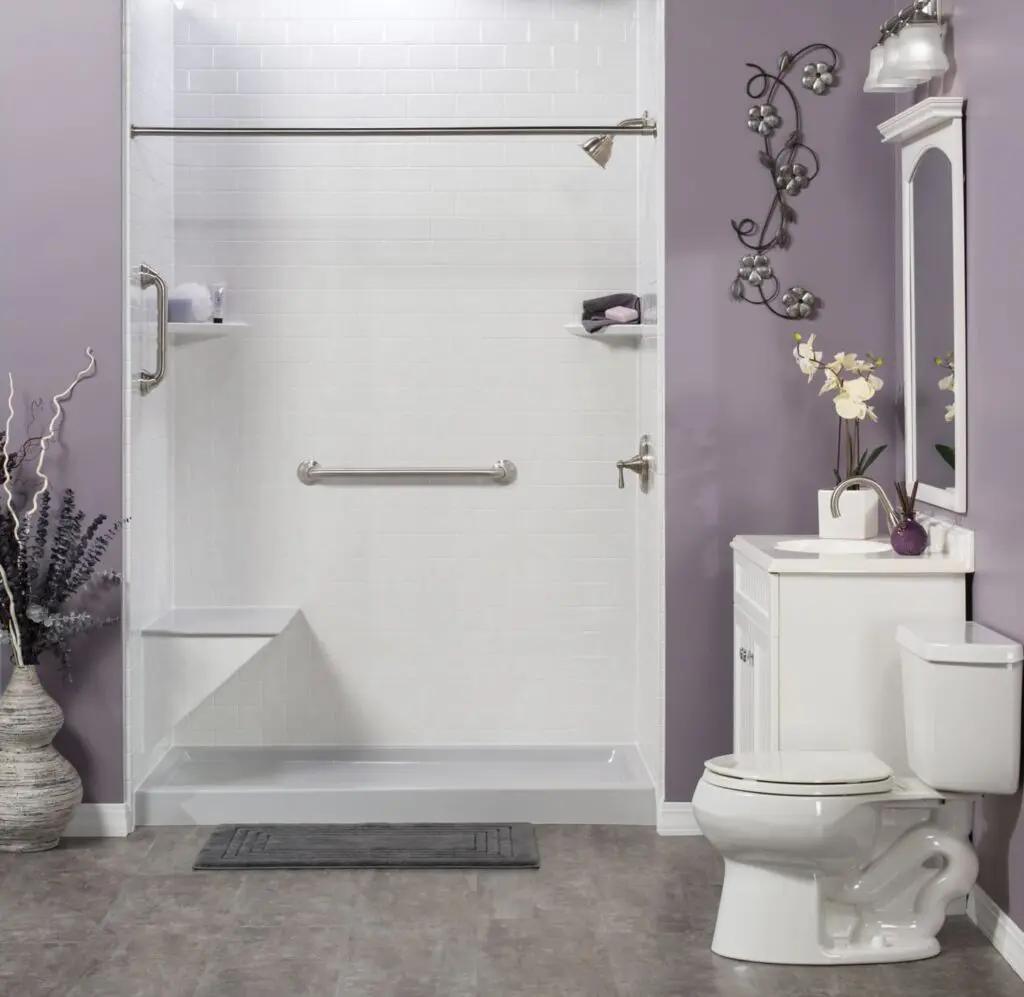
An L-shaped shower seat wraps partially around a corner, providing a broader sitting surface than a simple rectangular bench.
This design has a particularly important role in accessible shower layouts. The U.S. Access Board notes that L-shaped seats can offer additional support and stability from the back wall in applicable accessible showers. Federal accessibility guidance recognizes both rectangular and L-shaped shower seats.
This style may make sense when:
- Seated bathing is a priority
- Transfers need to be considered
- The user needs additional support
- The shower is being designed around accessibility rather than convenience alone
Seat shape is only one part of the design. Grab bars, shower controls, the handheld showerhead, entry location, and available floor space should all work together.

6. Freestanding Shower Bench or Stool
A freestanding bench offers flexibility because it’s not permanently attached to the shower.
It can be repositioned, removed, or replaced as needs change, making it useful for homeowners who aren’t ready for a permanent modification.
Advantages may include:
- No wall mounting
- Easy repositioning
- Different sizes and styles
- Ability to remove it when it’s not needed
However, stability matters. Look carefully at the product’s weight capacity, feet, slip resistance, dimensions, and suitability for wet environments.
If someone regularly depends on seating because of limited balance or mobility, a professionally planned fixed or fold-down solution may offer a more integrated approach.
Fixed or Fold-Down Shower Seat: Which Is Better?
This is one of the most common decisions homeowners face.
A fixed bench is always available and can become an attractive architectural feature. A fold-down seat prioritizes flexibility and preserves more space when seating isn’t needed.
Consideration | Fixed Bench | Fold-Down Seat |
Availability | Always accessible | Lower when needed |
Floor space | Permanently occupies space | Preserves more open space |
Design | Can integrate with tile | Often more visibly functional |
Small showers | May feel bulky | Often better suited |
Shared showers | Always present | Can fold away |
Structural support | Required | Required |
Neither is automatically safer or better. The right option depends on how much space you have, who will use the shower, and whether seating is primarily for convenience or mobility support.
How to Choose a Shower Bench
A shower bench should do more than look good. It needs to be comfortable, easy to access, and positioned around the way you move through the shower.
Before choosing a style, consider:
- Who will use it: Occasional use for shaving is very different from sitting throughout an entire shower.
- How easy the controls are to reach: If you’ll bathe while seated, controls and the shower spray should be accessible without twisting or standing.
- Whether a handheld showerhead would help: It can make seated bathing much easier and more comfortable.
- Where grab bars will go: Properly positioned grab bars and bathroom accessories can provide support when sitting down, standing up, or moving through the shower.
A shower seat also works best as part of a complete safety plan. Depending on your needs, that may include slip-resistant surfaces, better lighting, easier-to-reach storage, a lower threshold, or a wider entry.
If you’re already remodeling, think ahead. The National Institute on Aging encourages homeowners to plan for aging in place before extensive care is needed, which can make future adaptations easier. That might mean adding wall reinforcement for future grab bars or seating, choosing a more open shower layout, or installing accessibility features before they’re urgently needed.
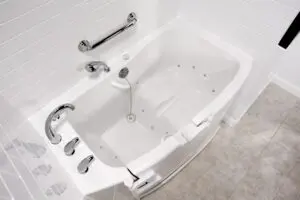
Atlas Home Safety offers bath safety solutions ranging from walk-in showers and barrier-free showers to shower seats, walk-in tubs, step-through tubs, and complete bathroom remodeling.
The goal isn’t to add every possible feature. It’s to create a shower that’s comfortable, practical, and ready to support you both now and in the future.
Why Michigan Homeowners Choose Atlas Home Safety
Choosing a shower bench isn’t simply about deciding between built-in and fold-down seating. It’s about finding an option that works with your bathroom, mobility, comfort, and long-term goals.
Atlas Home Safety is a division of Atlas Home Improvement, a family-owned Michigan company serving homeowners since 1989.
Homeowners choose us for:
- More than 35 years of home improvement experience
- Personalized bathroom safety recommendations
- High-quality products
- Professional installation
- Solutions designed around individual mobility needs
- Compassionate guidance throughout the remodeling process
- Dependable craftsmanship and service
We understand that conversations about changing mobility can be personal. That’s why we take the time to listen before recommending a solution.
We also offer flexible financing options and monthly promotions to help make important bathroom improvements more manageable.
Choose a Shower Bench That Fits the Way You Live
The best shower bench style isn’t necessarily the biggest or most elaborate option. It’s the one that gives you the right balance of comfort, available space, accessibility, and design.
A built-in tiled bench can become a beautiful focal point. A floating seat keeps the shower feeling open. A fold-down bench gives you flexibility. And when accessibility is the priority, the shape and placement of the seat can become an important part of a larger safety plan.
You don’t have to make the decision based on inspiration photos alone.
Call Atlas Home Safety at 800-768-4498 or contact us online to schedule a consultation and explore shower seating, accessible showers, and bathroom safety solutions for your Michigan home.
FAQ: Shower Bench Styles
What type of shower bench is best?
The best shower bench depends on your space and how you’ll use it. Built-in benches offer permanent seating and a custom look, while fold-down seats save space. Floating benches provide a streamlined appearance, and freestanding seats offer flexibility. If accessibility is the goal, prioritize stability, positioning, structural support, and ease of use.
Is a built-in shower bench worth it?
A built-in shower bench can be worthwhile if you want permanent seating and a feature that becomes part of the shower’s overall design. However, it takes up permanent space and should be planned carefully to ensure the remaining shower area is comfortable to use.
Are fold-down shower seats safe?
A properly selected and installed fold-down shower seat can provide dependable seating while allowing you to reclaim space when it’s folded away. Installation should follow the manufacturer’s requirements for structural reinforcement, fasteners, and weight capacity.
How high should a shower bench be?
The most comfortable height varies by user. As a technical reference, ADA Standards call for shower seats in covered accessible facilities to be 17 to 19 inches above the finished bathroom floor. Private residential showers aren’t automatically required to follow that dimension.
Can you add a shower bench to an existing shower?
Sometimes. Freestanding seats can often be added without remodeling, while wall-mounted or fold-down seats depend on available structural support and the existing wall assembly. A professional can evaluate whether the current shower is suitable for the type of seating you want.
Should there be grab bars near a shower bench?
Grab bars can provide additional stability when sitting down, standing up, or moving around the shower. The best placement depends on the user’s mobility, the seat location, and the shower layout. Grab bars also need to be securely mounted using a system appropriate for the wall and product.