


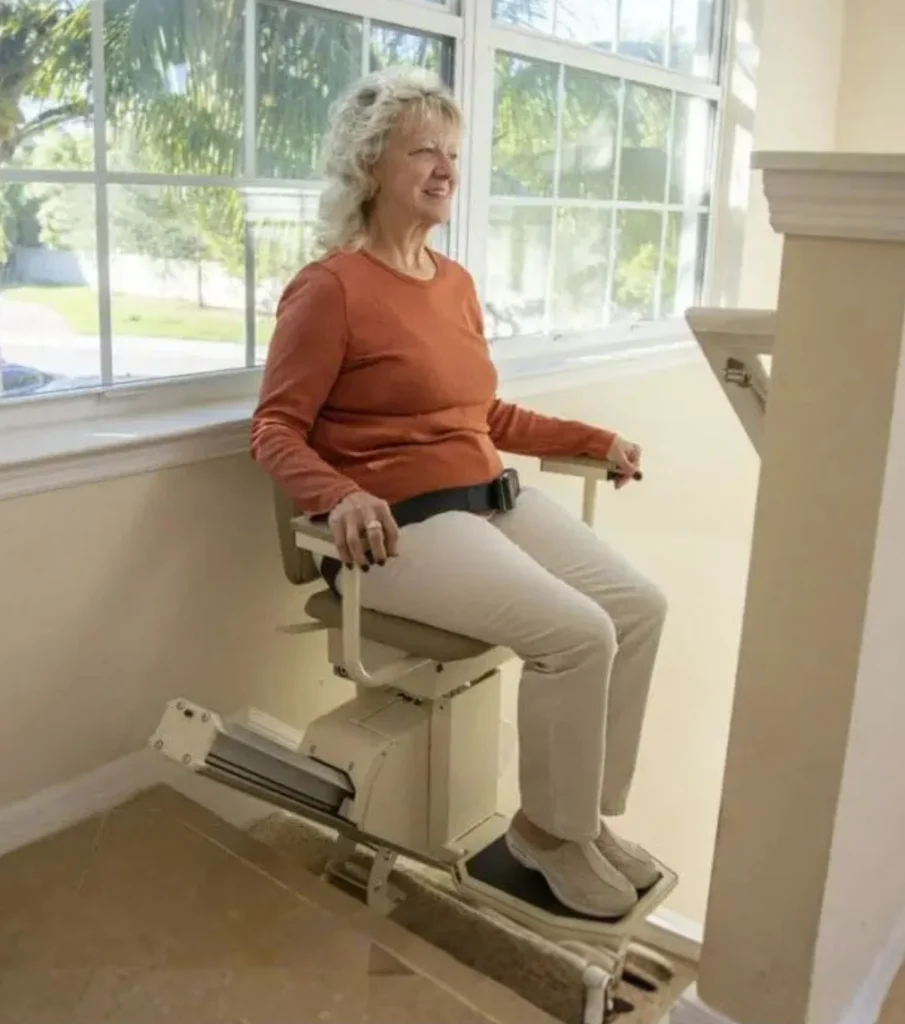
If you or a loved one is having difficulty using the stairs, a stair lift can make your home safer, more accessible, and easier to navigate. However, the cost of a stair lift can make homeowners wonder whether stair lift grants or other financial assistance programs can help pay for installation.
While there is no single nationwide grant that guarantees a free stair lift for everyone, several government programs, veteran benefits, Medicaid programs, tax provisions, and other resources may help eligible homeowners reduce the cost.
If you are considering a stair lift for aging in place, contact Atlas Home Safety at 800-768-4498 to discuss your home, mobility needs, and available options.
What Are Stair Lift Grants?
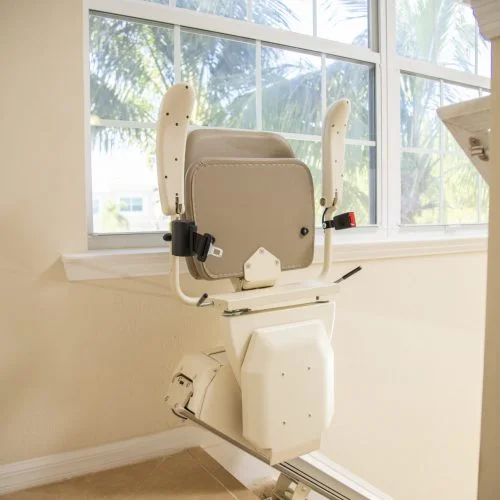
Stair lift grants are funding opportunities that may help eligible individuals pay for accessibility modifications, including certain stair lifts or other mobility equipment. These programs can come from federal agencies, state Medicaid programs, veterans’ organizations, local nonprofits, or other community resources.
It is important to understand that the term “stair lift grant” can be misleading. Most programs do not simply provide every applicant with money to purchase a stair lift. Instead, assistance may be available as part of a broader home modification, disability, veteran, Medicaid, or aging-in-place program.
Eligibility can depend on factors such as:
- Age
- Disability or medical necessity
- Income
- Veteran status
- Service-connected disability
- Medicaid eligibility
- Where you live
- Whether you own or rent your home
- The type of accessibility modification required
Before applying, determine exactly what a program covers, whether stair lifts qualify, and whether approval is required before installation.
What to Know Before Applying for Stair Lift Funding
If you are researching stair lift funding, start by gathering documentation that may be required by a program. Depending on the funding source, this could include:
- A medical recommendation or prescription
- Proof of disability or mobility limitations
- Proof of income
- Proof of home ownership or permission from a landlord
- A written estimate from an accessibility contractor
- Photos or measurements of the area being modified
- Documentation showing why the modification is medically necessary
Because programs change their requirements and funding availability, always confirm current eligibility directly with the agency administering the program.
Where Can You Find Stair Lift Grants?
There are several places to investigate when searching for grants for stair lifts or other forms of stair lift financial assistance. The right option depends heavily on your circumstances.
VA Housing Grants for Stair Lifts
Veterans with qualifying service-connected disabilities may have access to some of the most significant home modification assistance available in the United States.
The U.S. Department of Veterans Affairs offers the Specially Adapted Housing (SAH) and Special Housing Adaptation (SHA) grant programs. These programs can help eligible Veterans and Servicemembers purchase, construct, or modify a home to accommodate a qualifying disability.
VA materials also identify stair lifts as a type of special equipment that may be considered in certain specially adapted housing projects. Eligibility and approval requirements still apply, so Veterans should work directly with the VA before assuming a stair lift will be covered.
HISA and Stair Lift Financial Assistance for Veterans
Veterans may also want to investigate the VA’s Home Improvements and Structural Alterations (HISA) benefit. HISA provides limited lifetime funding for certain medically necessary improvements and structural alterations to a Veteran’s primary residence. The application requires medical justification and other documentation.
HISA is different from SAH and SHA, so Veterans should not assume that one program’s eligibility automatically applies to another.
For a Veteran researching stair lift financial assistance, contacting the appropriate VA Prosthetic and Sensory Aids Service office can be a useful first step.
Medicaid Home and Community-Based Services
Medicaid is another potential source of stair lift assistance programs, although coverage varies significantly from state to state.
Medicaid Home and Community-Based Services (HCBS) programs can provide services that allow eligible individuals to remain in their homes rather than moving into an institutional setting. Some state programs can include environmental modifications or other services that improve accessibility.
For example, Michigan’s MI Choice Waiver provides Medicaid-covered long-term care services and supports for eligible individuals who meet the program’s medical and functional requirements.
That does not mean every Medicaid participant automatically qualifies for a stair lift. Instead, homeowners should ask their state’s Medicaid agency or waiver administrator whether home modifications or environmental accessibility equipment are covered under their specific program.
If you are in Michigan, this can be an especially important avenue to investigate before paying for a stair lift out of pocket.
Visit the official Medicaid Home and Community-Based Services programs resource to learn more about these services and the different authorities states use to administer them.
Does Medicare Pay for Stair Lifts?
One of the most common questions homeowners ask when researching stair lift grants is whether Medicare will pay for the equipment.
In most cases, Original Medicare does not cover a residential stair lift simply because a person has difficulty climbing stairs. Medicare Part B covers certain durable medical equipment (DME) when it meets Medicare’s coverage requirements, but stair lifts are generally treated differently from covered equipment such as walkers, wheelchairs, and hospital beds.
This distinction is important because a stair lift is installed as part of the home rather than functioning like portable medical equipment.
That said, Medicare beneficiaries should not automatically assume that there are no options. Medicare Advantage plans can offer benefits beyond Original Medicare in some circumstances, so it is worth contacting your individual plan to ask whether it provides any supplemental home modification or accessibility benefits.
Atlas Home Safety also explains more about this topic in Does Insurance Cover Stair Lifts?.
Can a Stair Lift Qualify for a Tax Deduction?
Tax treatment is another option worth investigating when looking for stair lift funding.
The IRS states that certain home improvements made primarily for medical care may qualify as medical expenses. The IRS specifically includes certain accessibility improvements, including installing porch lifts, modifying stairways, and making other modifications to accommodate a disability. However, the rules can be complicated, and the amount that qualifies can depend on whether the improvement increases the value of the home.
For example, if an accessibility modification costs $10,000 but increases the home’s value by $3,000, the potential medical expense may be calculated differently than if the modification does not increase the home’s value.
This is not the same as receiving a grant or having the government reimburse the entire cost.
If you believe your stair lift or another accessibility modification may qualify as a medical expense, keep detailed records and speak with a qualified tax professional about your individual circumstances. The IRS also recommends reviewing the applicable rules before claiming home improvements as medical expenses.
Review the IRS guidelines for medical expenses for information about qualifying home improvements, medical expenses, and potential limitations.
What Other Stair Lift Assistance Programs Are Available?
Government programs are not the only place to look for stair lift financial assistance.
Depending on where you live, you may also find assistance through:
State and Local Programs
Some states, counties, cities, and community organizations provide funding for accessibility improvements. Programs may be designed for older adults, people with disabilities, low-income households, or residents who need modifications to remain safely at home.
Because these programs are often locally administered, availability can change from year to year.
Try contacting:
- Your state aging or disability agency
- Your Area Agency on Aging
- Your local independent living center
- Your county’s human services department
- Your Medicaid waiver administrator
- Local nonprofit organizations
- Community foundations
- Veteran service organizations
Ask specifically about grants for stair lifts, home modification grants, accessibility assistance, and aging-in-place programs.
Nonprofit and Community Assistance
Some nonprofit organizations provide financial assistance for home modifications based on disability, income, age, medical need, or other circumstances.
The important thing is to research each organization carefully. A legitimate program should clearly explain who qualifies, what expenses are covered, how to apply, and whether funds are currently available.
Be cautious of websites promising a “free stair lift” to anyone who applies. A legitimate funding program should not require you to provide sensitive financial information before you understand who operates the program and what its eligibility requirements are.
How to Apply for Stair Lift Grants
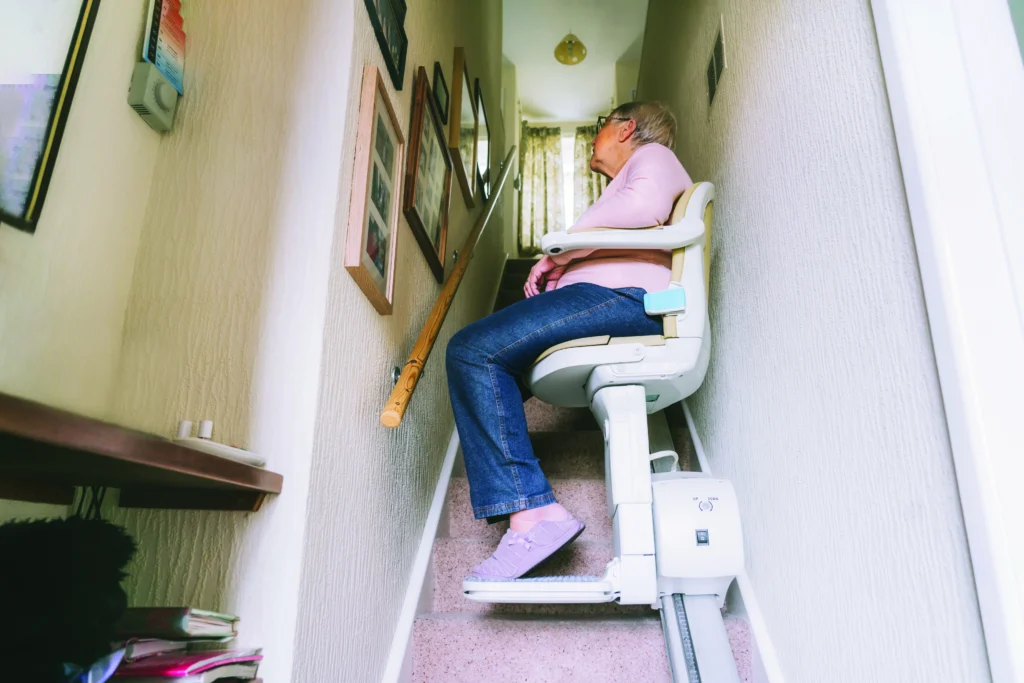
Once you find a potential program, the application process may require several steps.
1. Determine Your Eligibility
Start by reviewing the program’s requirements. Some programs focus on disability, while others focus on income, age, veteran status, or the ability to remain safely at home.
2. Get a Professional Assessment
A professional home assessment can help determine whether a stair lift is appropriate and what type of equipment your staircase requires.
3. Obtain a Written Estimate
Some funding programs require an itemized estimate before approving assistance.
The estimate may include:
- Equipment
- Installation
- Required modifications
- Permits, if applicable
- Labor
- Other project-related costs
Having a professional estimate can also help you understand how much assistance you actually need.
4. Apply Before Installation
This is one of the most important steps when seeking stair lift assistance programs.
Do not assume that a program will reimburse you after you purchase and install the equipment. Some programs require approval before work begins.
Always confirm the rules with the organization providing the funding.
5. Compare Your Remaining Payment Options
Even when you qualify for assistance, the program may only cover part of the project.
If you still have an out-of-pocket balance, ask your accessibility contractor about available payment options. Atlas Home Safety notes that it offers payment options designed to make safety improvements more manageable for qualified homeowners.
What If You Don’t Qualify for Stair Lift Grants?
Not qualifying for a grant does not necessarily mean a stair lift is out of reach.
There are several ways homeowners may be able to make the project more manageable, including:
- Contractor financing
- Payment plans
- Insurance or supplemental benefits, where applicable
- Tax treatment of qualifying medical expenses
- Veteran benefits
- Medicaid waiver programs
- Local nonprofit assistance
- Personal savings or family assistance
It is also worth comparing the cost of a stair lift with the potential cost of moving to a different home or making larger accessibility renovations.
A stair lift can be a relatively focused modification that allows someone to continue using multiple floors of their existing home.
For more information about the advantages of this solution, see Atlas Home Safety’s guide to the Benefits of Stair Lifts.
Are Stair Lifts Worth It for Aging in Place?
For many homeowners, the biggest benefit of a stair lift is not simply convenience. It is the ability to continue using their home safely.
Stairs can become increasingly difficult because of reduced strength, balance concerns, joint problems, fatigue, or other mobility challenges. A stair lift can allow a person to travel between floors without physically climbing the staircase.
This can support an aging-in-place plan by allowing homeowners to continue living in familiar surroundings rather than immediately considering a move.
A stair lift may also be just one part of a larger home safety plan. Depending on the home, other modifications could include:
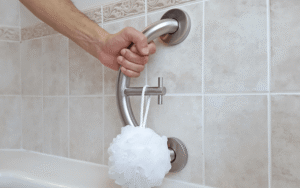
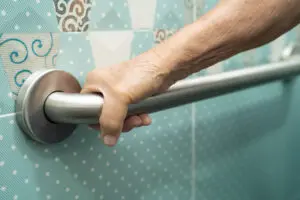
- Grab bars and support rails
- Improved lighting
- Non-slip flooring
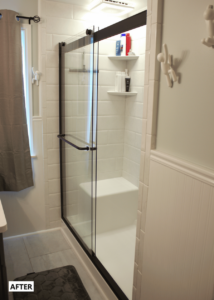
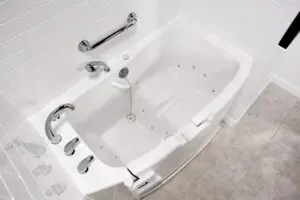
- Bathroom accessibility improvements
- Wheelchair ramps
- Platform lifts
- Personal lifts
- Emergency call systems
Atlas’s guide to Home Safety Modifications for Seniors explores several of these options.
Choosing the Right Accessibility Solution
A stair lift is not automatically the best solution for every person or home.
For someone who can safely transfer into a seated position, a stair lift may provide an efficient way to move between floors. Someone who needs to remain in a wheelchair or scooter may need to consider a platform lift instead.
Home layout matters, too. The type of staircase, available space, number of levels, and user’s mobility all affect the right solution.
Atlas Home Safety compares these options in Ramp vs. Stairlift vs. Platform Lift.
For another perspective, their Chair Lift vs. Stair Lift guide explains why these terms are often used interchangeably and what homeowners should consider when selecting a system.
Common Mistakes When Searching for Stair Lift Grants
Searching for funding can be time-consuming, but avoiding a few common mistakes can make the process easier.
Assuming Everyone Qualifies
Programs have specific eligibility requirements. A person may qualify for one type of assistance but not another.
Installing Before Approval
Some programs require preapproval. Installing equipment before receiving approval could make you ineligible for reimbursement.
Relying on Outdated Information
Funding programs and benefit limits can change. Always verify current information with the government agency or organization administering the program.
Looking Only for “Free Stair Lift” Programs
Searching only for a free stair lift can cause you to overlook partial grants, Medicaid waivers, veteran benefits, tax considerations, financing, and local assistance.
Instead, search broadly for home modification assistance, accessibility grants, disability resources, and aging-in-place funding.
Choosing Equipment Based Only on Price
The least expensive stair lift is not necessarily the best choice for your home or mobility needs. A professional assessment can help determine the appropriate configuration before you commit to a purchase.
If you have questions about stair lift safety and common misconceptions, read Atlas Home Safety’s Stair Lift Myths: What Is Fact and Fiction?.
Find Stair Lift Funding and Accessibility Solutions With Atlas Home Safety
Finding stair lift grants can take research, and there is no one-size-fits-all funding solution. The best option may depend on your disability status, income, veteran status, insurance, location, and the specific accessibility needs of your home.
Even if you do not qualify for a grant, you may have other ways to make a stair lift more affordable. The important thing is to understand your options before making a purchase.
At Atlas Home Safety, we help Michigan homeowners find practical solutions for safer, more accessible homes. From stair lifts and ramps to platform lifts and other home modifications, our team can help you determine which solution fits your needs. Explore the Atlas Home Safety Blog for more information about home accessibility and aging in place.
Ready to explore your options? Contact Atlas Home Safety to schedule a consultation and discuss your stair lift needs. Call 800-768-4498 to speak with our team and take the next step toward a safer, more accessible home.
Stair Lift Grants: Frequently Asked Questions
Are there government grants for stair lifts?
Yes, some government programs may provide financial assistance for accessibility modifications that can include stair lifts, but eligibility varies. Veterans with qualifying disabilities may have access to VA housing adaptation programs, while eligible Medicaid beneficiaries may have access to state-specific HCBS programs.
How can I get a free stair lift?
There is no universal program that provides a free stair lift to everyone. Some eligible homeowners may receive enough assistance through a grant, waiver, or other program to significantly reduce or potentially eliminate their out-of-pocket cost. Always verify the program’s requirements before purchasing equipment.
Does Medicare pay for stair lifts?
Original Medicare generally does not cover residential stair lifts. Medicare Part B covers certain types of durable medical equipment, but a stair lift is generally considered a home accessibility modification rather than standard covered DME.
Can Veterans get help paying for a stair lift?
Potentially. Veterans with qualifying service-connected disabilities may be eligible for VA programs such as Specially Adapted Housing or Special Housing Adaptation grants. VA materials also identify stair lifts among special equipment that may be considered in certain adapted housing projects.
Can a stair lift be a tax-deductible medical expense?
Certain accessibility-related home improvements may qualify as medical expenses under IRS rules when their primary purpose is medical care or accommodating a disability. The amount that qualifies can depend on factors such as whether the improvement increases the home’s value. Consult a tax professional before claiming a deduction.